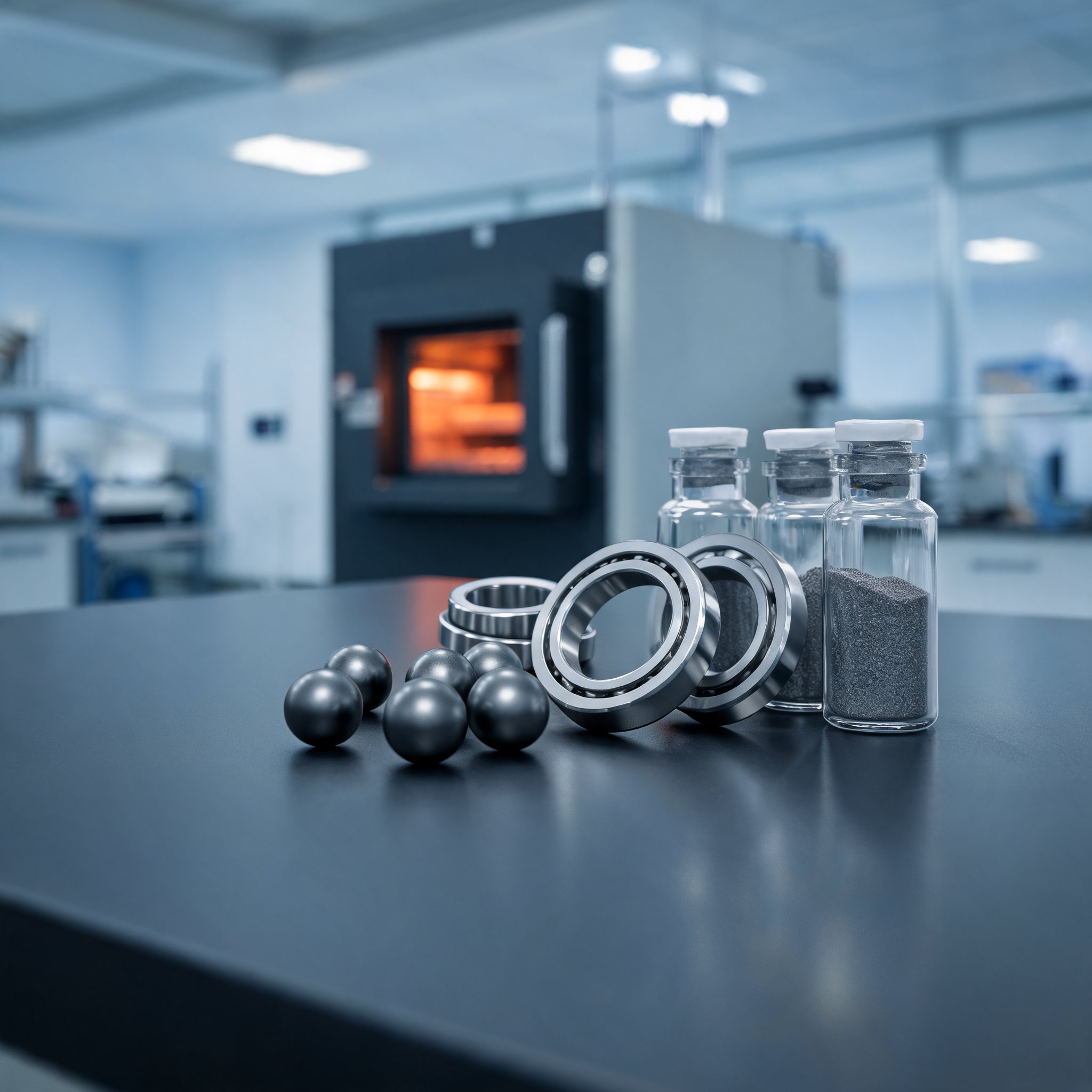
SKF has opened a new Ceramic Process Laboratory (C-Pro Lab) at its research and development center in Houten, the Netherlands, a facility the company says will consolidate its capabilities across the full ceramic manufacturing value chain, from raw material powder processing through to high-performance component engineering.
The bearing manufacturer framed the lab as a step toward wider global adoption of advanced hybrid bearing technology, which combines high-grade steel rings with silicon nitride rolling elements. Compared with conventional all-steel bearings, SKF says hybrid designs offer superior electrical insulation, lower weight and reduced friction.
Demand linked to electrification
SKF ties the investment to a shift toward electrification and higher energy efficiency across industry, which it says is accelerating demand for hybrid ceramic bearings. The company argues that ceramic and hybrid bearing technologies are essential enablers of clean, reliable rotation in next-generation industrial electrical applications.
Annika Ölme, SKF's chief technology officer and senior vice president for technology development, said the lab gives the company full command of the end-to-end ceramic process, allowing it to innovate faster, optimize material performance and speed commercialization of high-performance hybrid solutions for customers worldwide.
End-to-end process in one location
The lab is positioned as a global competence center within SKF's research and technology development organization, with a mandate to optimize ceramic technology from start to finish. By bringing powder formulation, compaction, sintering and surface finishing together, researchers can prototype new material compositions quickly, refine microstructures and improve process efficiency for high-volume manufacturing.
The scope spans the preparation of raw material powders through to finished components, a sequence the company describes as central to moving laboratory formulations into production-ready parts.
Target applications
According to SKF, hybrid ceramic bearings address operational challenges in industrial automation, aerospace and high-speed machinery, sectors the company says are expanding under pressure for electrification, energy efficiency and reliability. These industries increasingly rely on ceramic technology to prevent electrical erosion in high-speed electric motors, to cut friction by up to 50 percent, and to deliver reliability at extreme temperatures in demanding environments.
The company's reference to electrical erosion concerns high-speed electric motors, where it says ceramic technology helps prevent this form of damage. Its figures on friction reduction and extreme-temperature performance are presented as company claims rather than independently verified results.
Opening with customers present
The official opening brought together customers from key industries including railway, aerospace and drives, alongside other stakeholders and H.E. Julius Liljeström, Swedish Ambassador to the Netherlands. SKF presented the gathering as a reflection of the importance of close customer collaboration in advancing industrial innovation and sustainable technology.