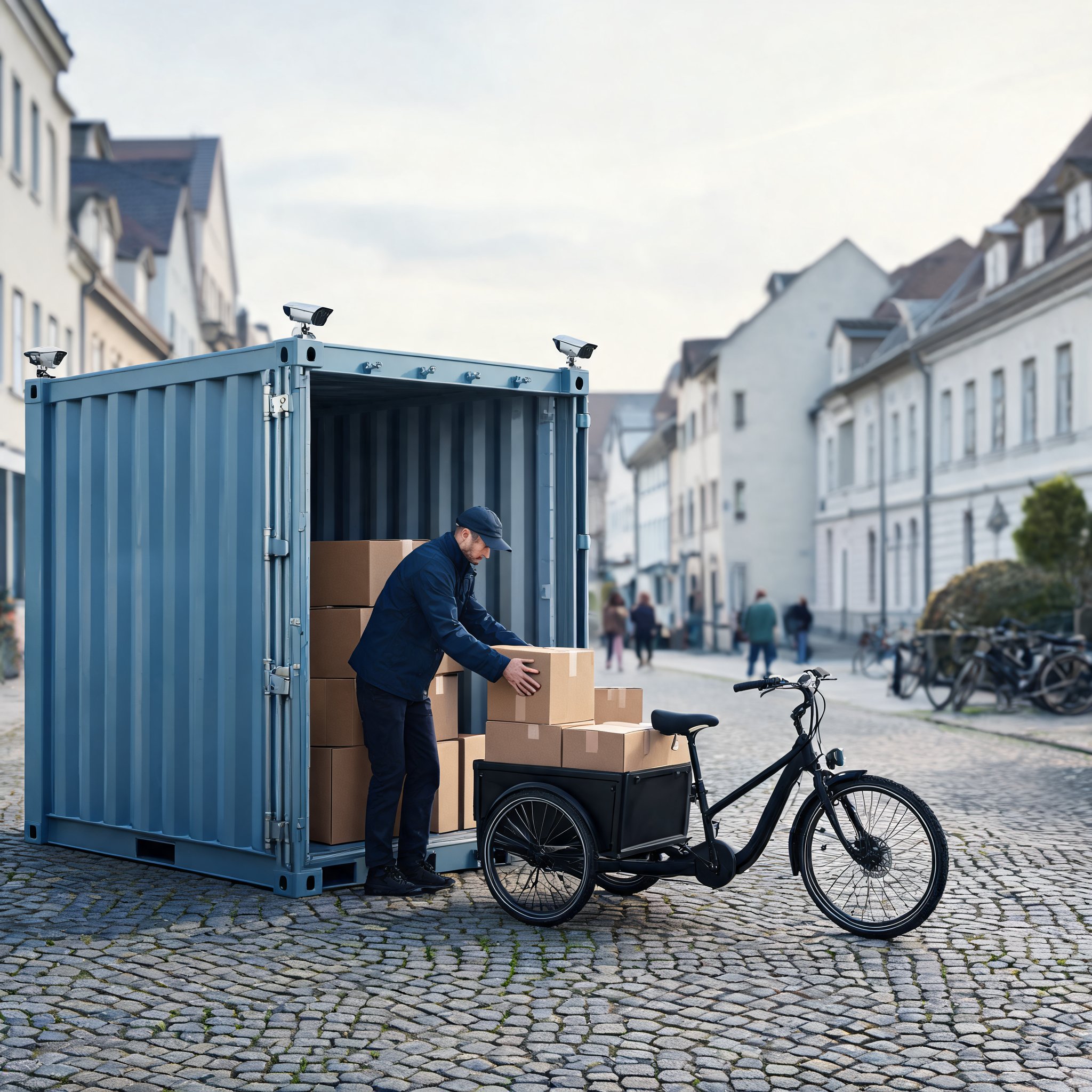
Omniva, the international technology and logistics group, has opened its first MicroHUB in Tallinn, a pilot intended to reduce van traffic in the Estonian capital by letting couriers reload parcels close to the areas they serve.
The hub is a specially adapted container fitted with security systems and sited inside a courier's delivery area. Rather than making a lengthy round trip back to a sorting centre, couriers can collect additional parcels during their rounds and carry on working the same neighbourhood. Omniva says this should allow it to use more cargo bikes instead of vans for parcel deliveries.
The company links the project to three objectives: saving couriers time, getting parcels to customers faster and supporting greener urban logistics. Hannes Falten, head of delivery innovation at Omniva, said initial estimates suggest a MicroHUB could save each courier up to three hours a day and allow that courier to serve around 20 additional customers. Those figures are the company's own early projections and have not yet been confirmed in live operation.
Falten described the concept as a way to handle growing parcel volumes without adding more vans to city streets, and said Omniva wants to move towards smarter logistics with a smaller environmental footprint.
Pilot timeline and conditions for expansion
Omniva expects the first results from the Tallinn pilot within a month and says the findings will help determine its next steps. In a second phase, the company plans to test parcel collection from the MicroHUB in cooperation with Crowd Delivery couriers, which would extend the container's role beyond courier resupply towards a possible pickup point.
Any wider deployment depends on how the trial performs. If it succeeds, Omniva intends to introduce more MicroHUBs in Tallinn and to roll out a similar solution in Riga, Vilnius and Kaunas.
The container also has a visual dimension. Its exterior was painted by a team led by street artist S-Boy, which Omniva says is meant to bring more colour and character to the neighbourhood and give passers-by something worth stopping to look at.
The company has not disclosed how many parcels the unit holds, how it is restocked or what vehicle movements the pilot is expected to remove; the time savings and customer gains remain estimates until the trial reports. The project sits in the last-mile stage of urban logistics, where distributed drop-off points and lighter vehicles are being tested to shorten the distance between stock and doorstep.