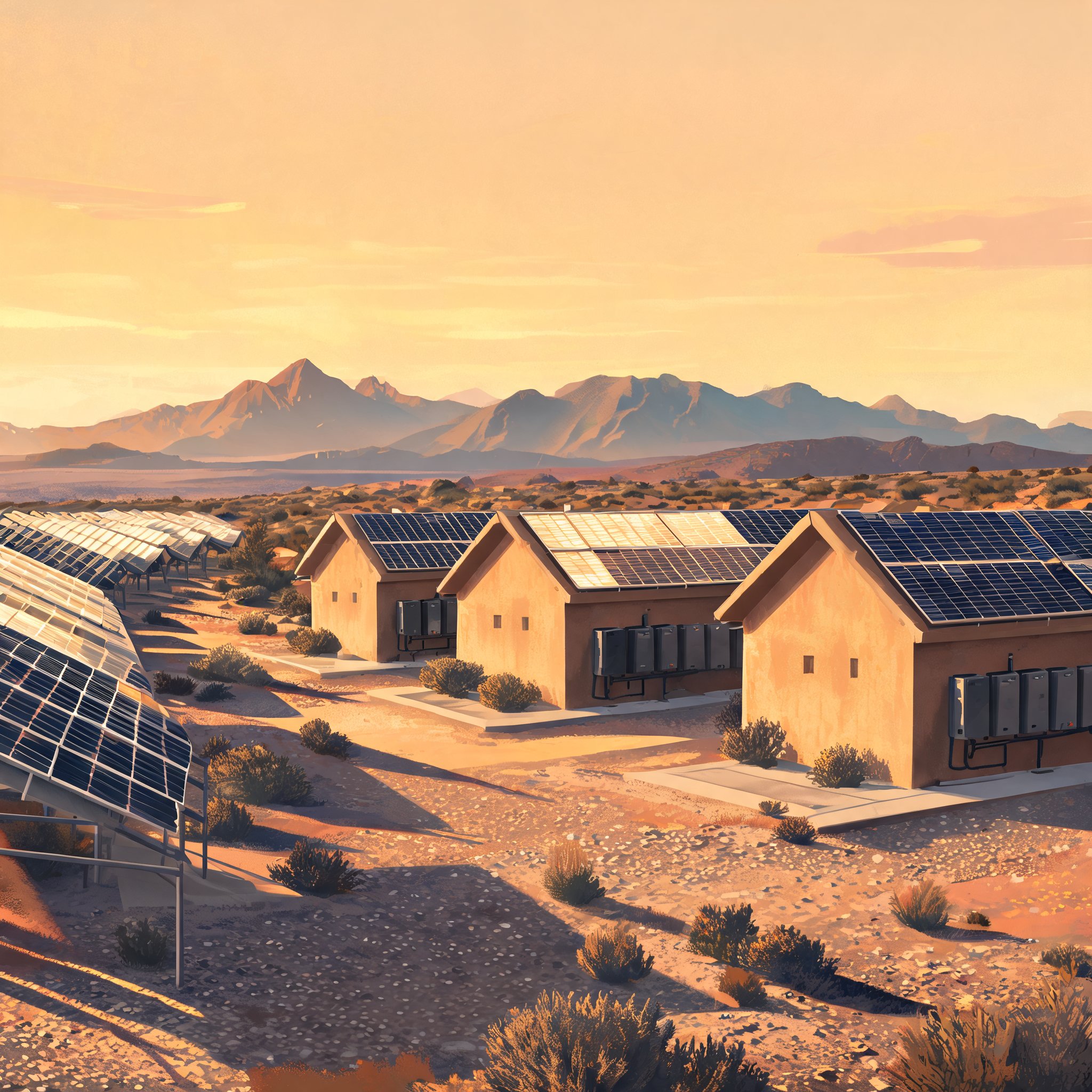
Officials with the Mesa Grande Band of Diegueño Mission Indians and the nonprofit Solar Electric Light Fund (SELF) have completed solar and battery storage installations at three Tribal facilities on the Mesa Grande Reservation in San Diego County, California. According to the announcement, the project is the first public clean energy installation on the reservation and a further step in the Tribe's long-running effort to gain greater control over its energy supply.
The equipment serves three administration buildings — Tekamuk, Hallyeyaaw and Golden Eagle — which function as civic and community hubs supporting Tribal government, housing services, cultural and educational activities, food distribution and emergency response.
The solar arrays are sized to cover the three buildings' current electricity needs while leaving room for future growth. Combined, they are expected to generate roughly 60 MWh of solar electricity a year and to reduce the Tribe's electricity costs by at least $16,780 annually. Paired batteries allow the buildings to keep operating independently of the grid when power fails.
Outages are routine in the rural community
Curtis La Chusa, chairman of the Mesa Grande Tribal Council, said electricity is easy to take for granted until service is interrupted, but that at Mesa Grande interruptions are a regular reality. Outages there can last days at a time, he said, disrupting the services the Tribe provides to its members.
Two decades of energy work
The installation builds on more than 20 years of Tribal efforts to expand access to reliable, affordable clean energy. Grid electricity did not reach the reservation until the 1950s, and some homes remain off the grid today, relying on small generators to meet basic household needs. Over the years the Tribe has pursued residential solar, renewable energy planning and workforce development. Four Tribal members who had previously received solar installation training were employed on the project.
Bob Freling, executive director of SELF, which facilitated the project, said reliable and affordable energy gives communities room to invest in what comes next. Lower energy costs and stronger resilience can free up resources while providing a foundation for growth, he said, and the organization is watching how clean energy helps Mesa Grande reach its goals.
Housing plan moves ahead
The clean energy work coincides with the start of a long-term plan for new housing and community infrastructure on the reservation. That plan calls for 1,500 new homes intended to address the affordability and supply shortages that have historically limited how many members can live on Tribal land, and it would include the first new housing built there since 2005.
La Chusa said the Tribe has a bright future ahead, beginning with letting its people come home and providing the spaces and services they need to thrive.
Funding for the project came from the William, Jeff and Jennifer Gross Family Foundation and others.